
About Us
Established in 2017, Shraddha Management Consultancy is situated in Maharashtra's two major cities, Pune and Mumbai. We now offer and extend our services all across Maharashtra in order to provide professional guidance to solve your business problems and stimulate company growth.
Payroll Management Services in India: PF, ESIC, PT & MLWF Compliance Made Simple
Payroll Management Services in India: PF, ESIC, PT & MLWF Compliance Made Simple
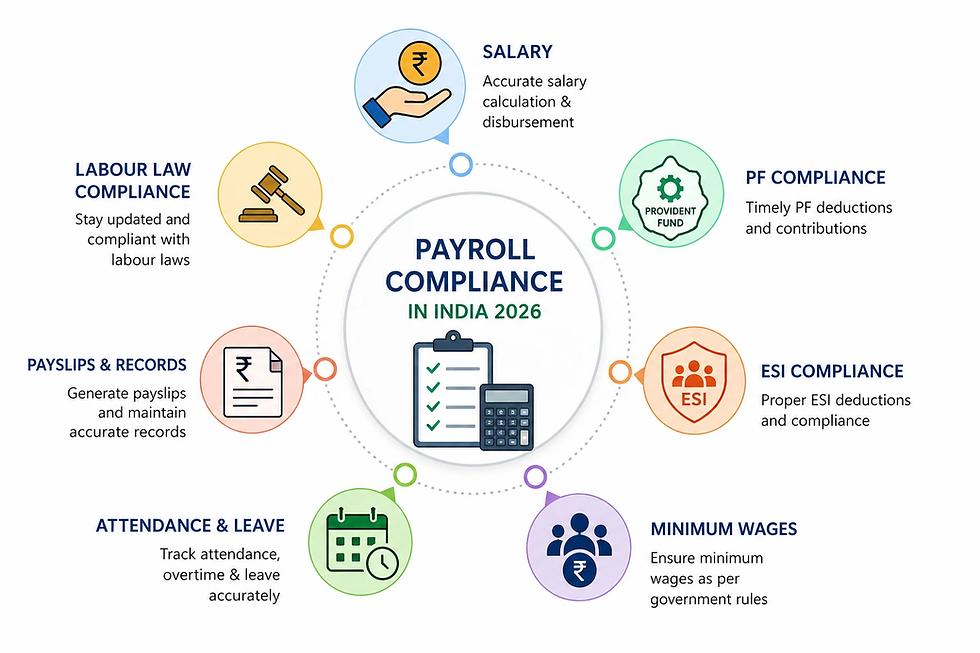
Paying salaries on time is only one part of payroll. Behind every payslip are salary calculations, employee deductions, statutory contributions, payroll records, returns to file and compliance deadlines. For many growing businesses, managing all of this every month can take significant time and effort.
This is why businesses increasingly choose professional payroll management services in India. Payroll outsourcing can help businesses manage salary processing, statutory deductions and applicable compliance requirements while allowing their internal teams to focus on core business activities.
What Is Payroll Management?
Payroll management is the process of calculating employee salaries, managing deductions, processing statutory contributions and maintaining payroll records.
A complete payroll process may include:
- Monthly salary calculation and processing
- Employee deductions and contributions
- PF compliance and filings
- ESIC compliance and filings
- Professional Tax (PT)
- Labour Welfare Fund (MLWF)
- TDS on salary, where applicable
- Payslip generation
- Payroll records and reports
- Statutory returns and challans
The exact payroll requirements depend on factors such as the business structure, employee strength, salary structure and state in which employees work.
Why Is Payroll Compliance Important?
Payroll compliance is an important part of running a business. Errors in salary calculations or delays in statutory payments and filings can create financial and administrative problems.
For example, incorrect deductions, missed deadlines or incomplete records can result in additional compliance work, interest, penalties or employee concerns.
Accurate and timely payroll helps businesses:
- Process salaries correctly
- Maintain proper employee records
- Manage statutory deductions
- Track compliance deadlines
- Reduce manual payroll errors
- Maintain employee confidence
- Keep payroll documentation organized
A structured payroll compliance process can be especially important as a business grows or starts operating across multiple locations.
What Are the Main Payroll Compliance Requirements in India?
Payroll compliance can involve several statutory requirements depending on the business and employees.
PF Compliance
Provident Fund (PF) is a retirement savings and social-security benefit administered through the Employees’ Provident Fund Organisation (EPFO).
PF requirements apply to establishments that fall under the applicable statutory conditions. Businesses need to assess their applicability and manage the required registration, contributions, records and filings.
ESIC Compliance
Employees’ State Insurance (ESIC) provides medical and other social-security benefits to eligible employees covered under the applicable scheme.
Businesses covered by ESIC requirements need to manage employee registration, applicable contributions, records and statutory filings.
Professional Tax Compliance
Professional Tax (PT) is a state-level tax that may be deducted from employee salaries where applicable.
Professional Tax rules, salary slabs and filing requirements can vary by state. Businesses operating in different states therefore need to consider the requirements applicable to each location.
MLWF Compliance
The Maharashtra Labour Welfare Fund (MLWF) is a welfare-related statutory requirement applicable under Maharashtra legislation.
Where applicable, businesses need to manage the required employer and employee contributions and related compliance requirements.
What Does Payroll Outsourcing Include?
Payroll outsourcing in India means engaging an external payroll service provider to manage some or all of the business’s payroll activities.
Depending on the business requirements, payroll outsourcing services can include:
- Salary calculation
- Payroll processing
- Employee deductions
- PF processing and compliance
- ESIC processing and compliance
- Professional Tax compliance
- MLWF compliance
- TDS-related payroll support
- Payslip generation
- Payroll reports
- Statutory challans and returns
- Payroll records and documentation
Outsourcing payroll allows businesses to have professional support without building a large internal payroll and compliance team.
Should You Outsource Payroll?
In-house payroll may work well for very small teams. However, as employee numbers increase, payroll becomes more time-consuming and requires closer attention to statutory compliance.
Payroll outsourcing may be useful for businesses that:
- Have a growing workforce
- Want to reduce manual payroll work
- Need support with statutory compliance
- Operate across multiple locations
- Want more organized payroll records
- Need regular salary processing
- Want support in tracking compliance changes
Professional payroll support can help businesses manage their payroll process more systematically as they grow.
Benefits of Payroll Outsourcing in India
Reduces Administrative Work
Payroll involves recurring salary calculations, deductions, records and compliance activities. Outsourcing can reduce the administrative workload for internal teams.
Improves Payroll Accuracy
A structured payroll process helps businesses manage salary calculations and statutory deductions more consistently.
Supports Statutory Compliance
A payroll compliance consultant can help businesses manage applicable PF, ESIC, Professional Tax and MLWF requirements.
Saves Internal Resources
Businesses can avoid the need to build a large internal payroll and compliance function as their workforce grows.
Helps With Multi-State Payroll
Businesses with employees working in different states may need to manage different state-specific requirements, particularly for Professional Tax and Labour Welfare Fund.
Provides Ongoing Payroll Support
Payroll is a recurring activity. Professional support can help businesses manage monthly processing and compliance requirements consistently.
Payroll Management for Businesses With Employees in Multiple States
Managing payroll becomes more complicated when employees work across different states.
Professional Tax and Labour Welfare Fund requirements can vary depending on the applicable state legislation. Businesses therefore need to consider the relevant requirements for employees based on their applicable location.
A professional payroll management service can help businesses organize payroll processes for employees working across multiple locations.
What Documents Are Needed for Payroll Processing?
The documents and information required can vary depending on the business and its payroll structure.
Common requirements may include:
- Business registration details
- Employee personal details
- Employee joining information
- Salary structure
- Attendance and leave records
- PAN details
- Bank account details
- PF-related information
- ESIC-related information
- Professional Tax information, where applicable
- Other applicable statutory records
Having accurate employee and salary information helps ensure smoother payroll processing.
How Shraddha Management Consultancy Helps With Payroll
Shraddha Management Consultancy provides payroll management and statutory compliance services to help businesses manage their payroll requirements efficiently.
Our process includes:
1. Business Assessment
We review your business structure, workforce and salary setup to understand the applicable payroll requirements.
2. Data Collection
We collect and verify employee details, salary information and applicable statutory IDs.
3. Payroll Processing
Employee salaries, deductions and applicable contributions are calculated during each payroll cycle.
4. Statutory Filing
We support applicable PF, ESIC, Professional Tax and MLWF compliance, including relevant returns and challans.
5. Ongoing Support
We provide continued support for payroll-related requirements, compliance updates and audits.
Shraddha Management Consultancy has supported 1800+ businesses with payroll compliance, including businesses with multi-state operations across India.
We can also review existing payroll records to identify potential gaps and help businesses address compliance requirements before they become larger issues.
Frequently Asked Questions About Payroll Management
What is payroll management?
Payroll management is the process of calculating employee salaries, managing deductions, processing applicable statutory contributions and maintaining payroll records.
What does payroll outsourcing include?
Payroll outsourcing can include salary processing, deductions, payslip generation, payroll records and support for applicable PF, ESIC, Professional Tax, MLWF and other statutory requirements.
What is payroll compliance in India?
Payroll compliance involves following the applicable statutory requirements related to employee salaries, deductions, contributions, records and filings.
What are PF and ESIC compliance requirements?
PF and ESIC have specific applicability and compliance requirements. Businesses should determine which requirements apply to their establishment and eligible employees.
What is Professional Tax in payroll?
Professional Tax is a state-level tax that may be deducted from employee salaries where applicable. The applicable rules and requirements vary by state.
What is MLWF in payroll?
MLWF refers to the Maharashtra Labour Welfare Fund. Where applicable, businesses need to manage the required employer and employee contributions and related compliance requirements.
Is payroll outsourcing useful for small businesses?
Yes. Small and growing businesses can use payroll outsourcing to reduce administrative work and receive support with salary processing and applicable statutory compliance.
What documents are required for payroll processing?
Documents can include employee details, salary structures, attendance information, PAN and bank details, along with applicable PF, ESIC, Professional Tax and other statutory information.
Can payroll compliance be managed for multiple states?
Yes. Payroll can be managed for employees working across multiple states, but state-specific requirements such as Professional Tax and Labour Welfare Fund need to be considered where applicable.
Final Thoughts
Payroll should run quietly in the background, not take up your entire week. As your business grows, managing salaries, deductions, statutory contributions and compliance deadlines can become increasingly complex.
With the right payroll management services in India, businesses can streamline salary processing, maintain accurate payroll records and manage applicable statutory compliance more efficiently.
If you are looking for payroll outsourcing in India or need support from a payroll compliance consultant, professional assistance can help you manage your payroll process while you focus on growing your business.
Need Help With Payroll or Statutory Compliance?
Contact Shraddha Management Consultancy for professional payroll management and statutory compliance support.
Call us: +91-8971243186
Related Services:
Shop Act Registration
Payroll Management
Labour Law Advisory
